

Molecular and Cellular Perturbations and Xénobiotics (MCPX)
Leader : Fernando RODRIGUES LIMA (PR UPCité)
In parallel, the team is also working to document structure/function relationships of signaling, epigenetic or nucleolar enzymes and proteins.
To support this research, the team is developing new molecular and cellular methods and approaches (complex cellular models, toxicological stress tests, RAMAN spectroscopy, enzyme assays,…).
All of this research is developed within the framework of three main themes:
S Boland, S Devineau, K Maouche, F Marano, J Renault
This research focuses on identifying the pulmonary risk of the particulate component of the exposome (atmospheric particles, nanoparticles, micro- and nanoplastics) in co-exposure with other air pollutants, by developing new tools (toxicological tests, biophysical/imagery approaches, cellular models). This work is part of our understanding of pulmonary pathological processes (chronic obstructive pulmonary disease, cancer, …) and metabolic processes (diabetes), as well as studying the effects of these pollutants in pathological models. This research is based on the development of complex cell culture models (3D cultures, pathological models) and original biophysical approaches (Raman spectroscopy).
LC BUI, F BUSI, F DESHAYES, JM DUPRET, E PETIT, F RODRIGUES LIMA, M VIGUIER
This work focuses on the study of structure–function relationships and the pathophysiological implications of key enzymatic systems involved in epigenetic, metabolic, and cellular signaling processes. Our research particularly concerns the acetyl/methyl-transferases CREBBP and SETD2, the tyrosine phosphatases PTPN2/PTP1B, and the glycogen phosphorylase PYGB.
The objectives of this research are twofold: (i) to characterize the structure, catalytic regulation, and biological functions of these enzymes, and (ii) to understand their role in the development of metabolic and inflammatory diseases (diabetes, obesity, chronic inflammatory bowel diseases) as well as tumor pathologies.
In parallel, the team is developing studies aimed at analyzing the molecular, structural, and functional impact of xenobiotics (mainly chemical pollutants) on the activity and regulation of CREBBP, SETD2, PTPN2, and PYGB.
This research is based on an integrated approach combining enzymology, protein biochemistry, metabolic biochemistry, molecular and cellular biology, and structural biology. These studies rely on national and international collaborations. Furthermore, our research benefits from the Unit’s Bioprofiler technical platform and contributes to its development.
The team also manages the Bioprofiler resource of the Unit’s Metabolism platform: development of technical approaches (enzymatic assays, detection and characterization of molecules) dedicated in particular to toxicology, ecotoxicology and metabolism issues.
Team news
Welcome to Alaa Reguei, new PhD student at TPM2PI.
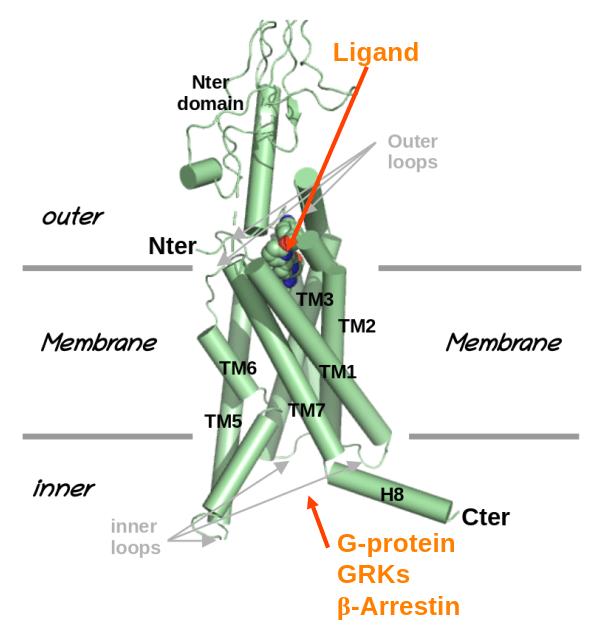
Alaa Reguei will join the TPM2PI team by october 2025, thank to a grant of thee graduate school "Drug Development". His work will focus on "Conception/optimisation of GPCRs biased modulators, combining AI and molecular simulation".
Call for Applications – BFA
The Functional and Adaptive Biology Unit (BFA, Université Paris Cité, CNRS UMR 8251, INSERM ERL 1133, https://bfa.u-pariscite.fr/ ) is launching a call for applications centered on the integrated study of pathological processes related to the nutritional...
InIdex MetaboBrain
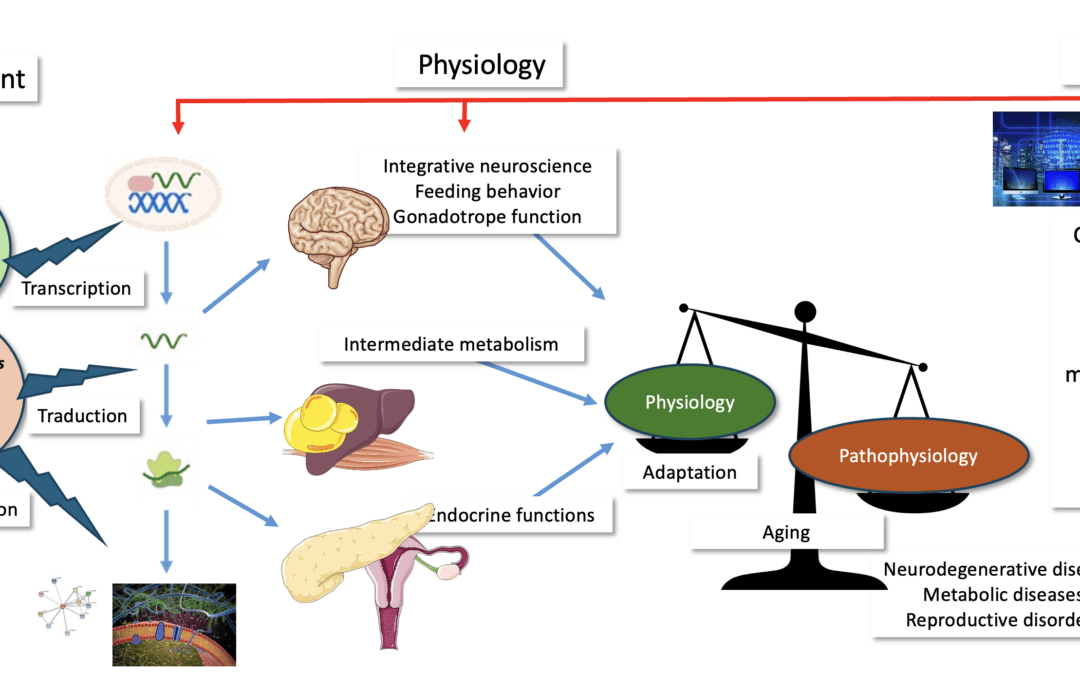
Acceptation du projet InIdex MetaboBrain, auquel l'équipe contribuera.
Last update 21/01/2025